Skip to content
Scale To Zero by Cloudanix
JM

Guest

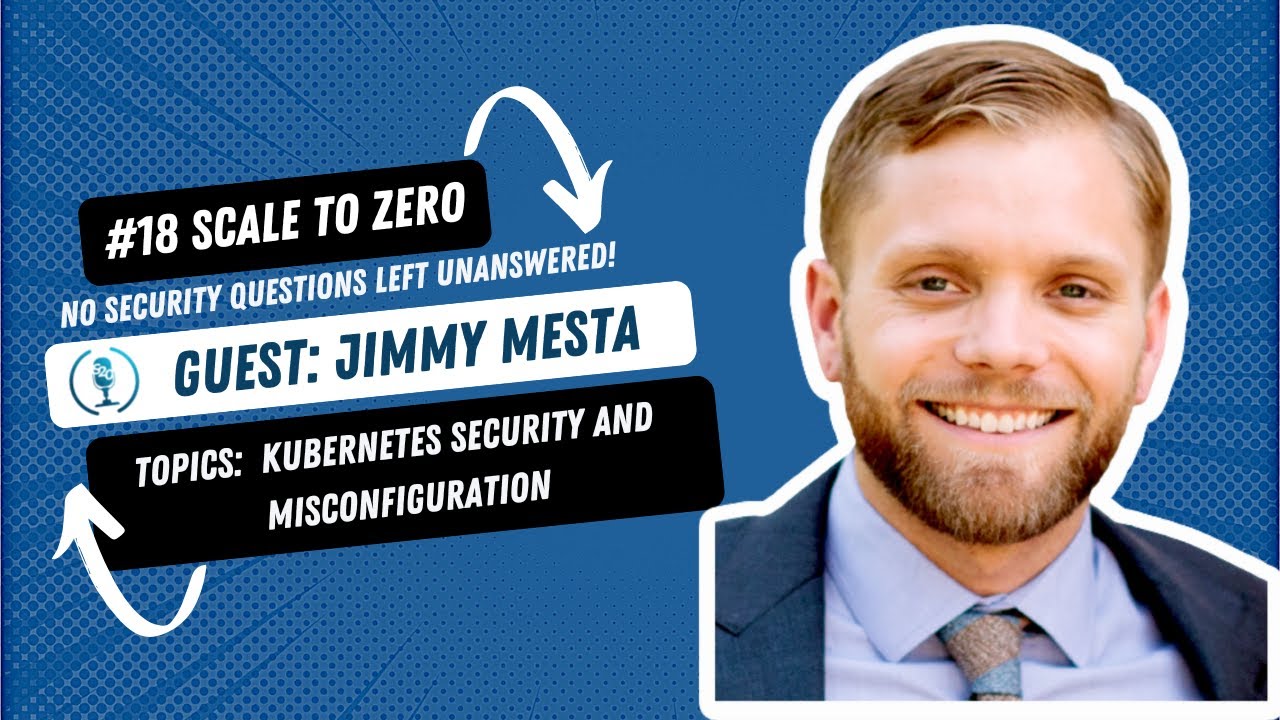
Jimmy Mesta

to today’s episode.

Episode with Jimmy

What Jimmy covered

Kubernetes Security And Misconfigurations With Jimmy Mesta

Jimmy Mesta explains that the shared-responsibility model covers the control plane but leaves workload secrets, base images, RBAC, and logging to the user. Kubernetes misconfiguration checks should be continuous, not one-time, covering manifests, CI/CD pipelines, and runtimes against CIS benchmarks or the NSA hardening guide. Self-hosting brings significant operational and security challenges, so managed offerings are preferable where possible.

  • As part of the shared responsibility model, cloud providers take care of a few areas like the control plane or data HCD, key value store and stuff like that. But there are areas like your own workload secrets, base images. There is RBAC dashboard and logs, which users need to be careful about. So that is the first one.
  • Kubernetes misconfig checks should be a continuous process instead of a one time scan and done type of thing. There are many areas when it comes to misconfig like your manifest, your CI/CD pipeline, mission controls, run times, etc. So focus on coverage using the CIS benchmarks or NSA hardening guide or OWASP Top 10.
  • With self-hosting. There are many operational and security challenges that come with it. Cloud providers are good at abstracting these security aspects from a managed perspective. For the managed pieces, if possible, avoid self-hosting and use a cloud managed K8s offering.
  • For Kubernetes Security instead of just relying on open source understand Kubernetes and Kubernetes Security Security in details, follow a threat modeling based approach rather than a checklist based approach.

New episodes twice a month

No security question left unanswered.

Follow Scale To Zero wherever you listen, or send us the question your team is stuck on and we will put it to an expert.